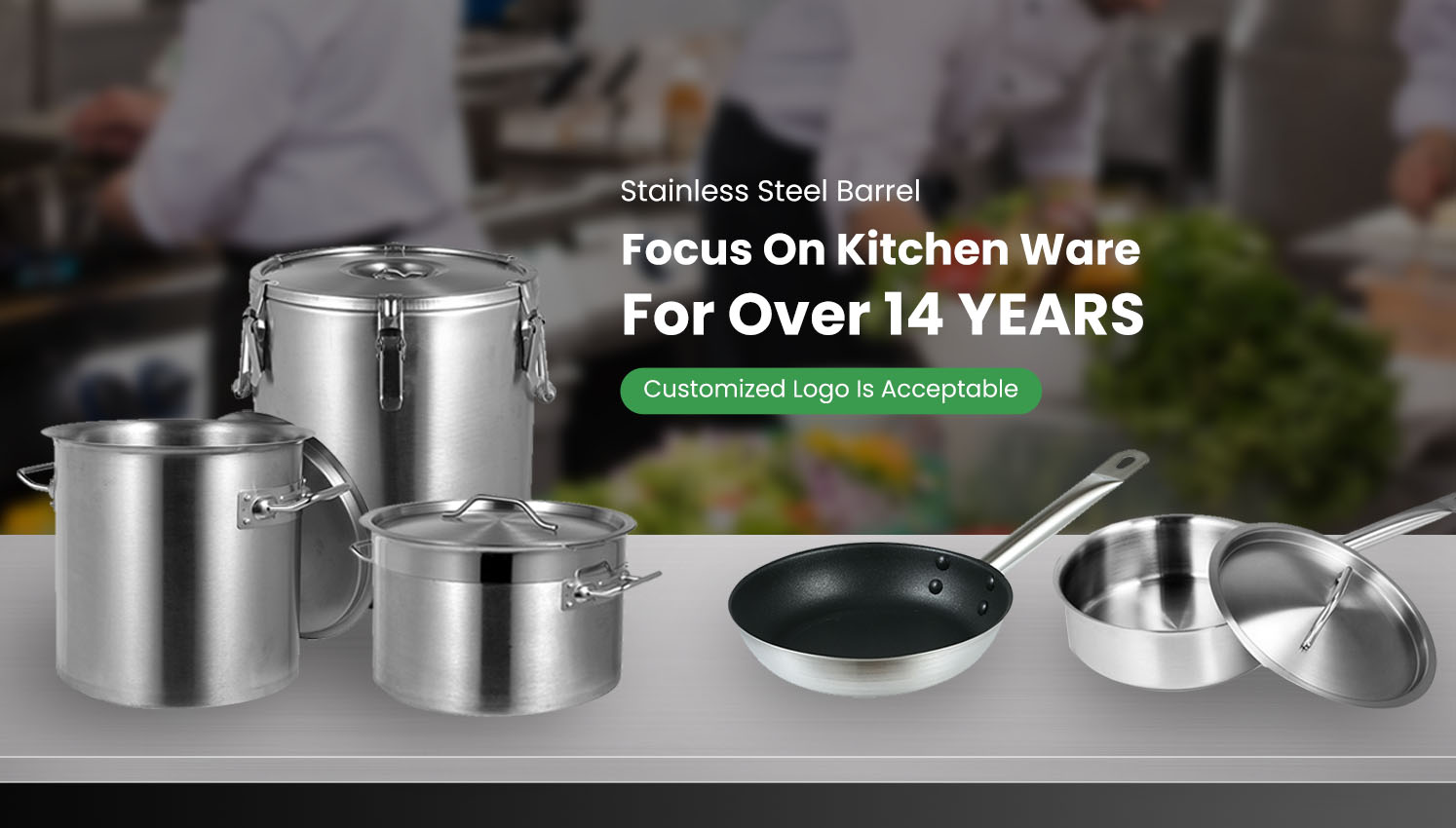
In foodservice, branding is no longer limited to packaging, menus, or storefront design. Buyers increasingly want kitchenware that supports a more unified image across buffet lines, hotel service, catering setups, and back-of-house operations. Stainless steel kitchenware can absolutely be customized for branding, but the value goes far beyond adding a logo. The real advantage comes from turning standard equipment into a more recognizable, more consistent, and more practical part of daily service. JUNERTE positions itself in this space as a manufacturer focused on stainless steel kitchenware, kitchen trolleys, and buffet equipment, with an established factory in Jiangmen, founded in 2016, operating a facility of about 8,000 square meters and employing more than 45 staff.
When a buyer invests in buffet equipment or service tools, appearance and consistency affect more than visual presentation. A branded product line helps create a stronger impression in hotels, banquet halls, catering companies, and restaurant groups that rely on repeated customer exposure. Matching finishes, engraved marks, custom lids, handle styles, and coordinated serving pieces can make service lines look more professional and easier to standardize across locations.
Branding also supports operational clarity. Distinct product identification can help separate product lines, distinguish premium service zones, and reduce confusion when equipment is used across multiple teams or venues. In this sense, customization supports both marketing value and practical daily management.
Customization can apply to several levels of the product, depending on the order target and how the equipment will be used. The most basic level is visual branding, such as laser logos, embossed marks, etched labels, and customized packaging. The next level is structural customization, which may include lid style, handle shape, edge treatment, thickness selection, or capacity adjustment. A deeper level involves product family alignment, where different items are developed with a unified design language so the full buffet or kitchen setup looks consistent.
For many buyers, the most effective customization is not the most complex one. It is the version that balances brand visibility, durability, cleaning convenience, and repeat-order consistency. A logo that looks good on day one but fades under frequent cleaning is less valuable than a permanent mark integrated into the production process.
Not every item carries the same branding value. Products that remain visible during service usually create the strongest impression. Chafing dishes, soup kettles, beverage dispensers, serving trolleys, gastronorm containers, and display equipment are often better branding carriers than purely hidden back-of-house tools. On the JUNERTE website, the company presents product categories including stock pot and barrel lines, Service Trolleys, Rack Trolleys, Steamers, Insulated Buckets, chafing dishes, buffet displays, electric equipment, and gastronorm containers, which gives buyers room to build a coordinated branded range rather than a single isolated item.
That is especially useful for buyers who want one supplier to support visual consistency across different service zones. Instead of mixing unmatched products from multiple sources, they can build a cleaner presentation standard with fewer sourcing variables.
| Customization area | Typical purpose | Business value |
|---|---|---|
| Logo marking | Brand recognition during service | Improves visibility and product identity |
| Surface finish | Match hotel, catering, or retail image | Creates a more premium and consistent look |
| Structure details | Adjust use experience and appearance | Better fit for target market preferences |
| Packaging | Support resale and distribution | Makes products easier to market and present |
| Product set alignment | Build one visual system across categories | Strengthens brand consistency and reorder efficiency |
A branding project works best when buyers define more than artwork. They should also confirm the service environment, cleaning frequency, expected reorder cycle, finish preference, and whether the same visual standard will be extended to multiple product categories. These details affect how the branding should be applied and which manufacturing method will be more stable over time.
It is also important to confirm whether the goal is promotional visibility, premium positioning, channel differentiation, or private label resale. Each goal points to a different product strategy. A catering distributor may prioritize consistent SKUs and packaging. A hotel supply buyer may care more about finish coordination and table presentation. A private label importer may need strong visual identity combined with repeatable production standards.
Brand customization only works when the supplier can control material quality, fabrication, finishing, and repeat production. JUNERTE presents itself as a direct manufacturer with a broad stainless steel kitchenware and buffet equipment range, which matters because branding programs often expand from one item into a series. A supplier already producing categories such as chafing dishes, trolleys, buffet displays, and stainless steel stockpots can help buyers create a more unified product portfolio instead of treating every item as a separate sourcing project.
This kind of category coverage reduces coordination pressure. It can also improve finish matching, communication speed, and long-term reorder stability. For buyers managing ongoing supply, that consistency often matters as much as the initial design itself.
JUNERTE’s strength is not only in making stainless steel products, but in offering a product structure that suits service-focused environments. Its published range includes buffet equipment, service trolleys, display items, gastronorm containers, and multiple chafing dish formats, including economic, roll top, and hydraulic styles. Some visible product details on the site also show practical service-oriented features such as hydraulic lid structures, glass viewing windows, and large-capacity buffet formats, indicating that the company develops products around real usage needs rather than appearance alone.
For branding projects, that matters because a good custom product must still perform well in daily operation. Appearance gets attention, but usability is what protects the brand after the sale.
Stainless steel kitchenware can be customized for branding, and when handled correctly, it becomes more than a decorative upgrade. It helps create a stronger visual identity, supports product consistency, improves presentation standards, and makes repeat purchasing more structured. The most successful branding programs combine durable marking methods, coordinated product selection, and a manufacturer able to support both quality control and long-term continuity. With its established factory profile and broad buffet equipment range, JUNERTE is well positioned to help buyers develop kitchenware lines that look consistent, perform reliably, and reflect their market identity.