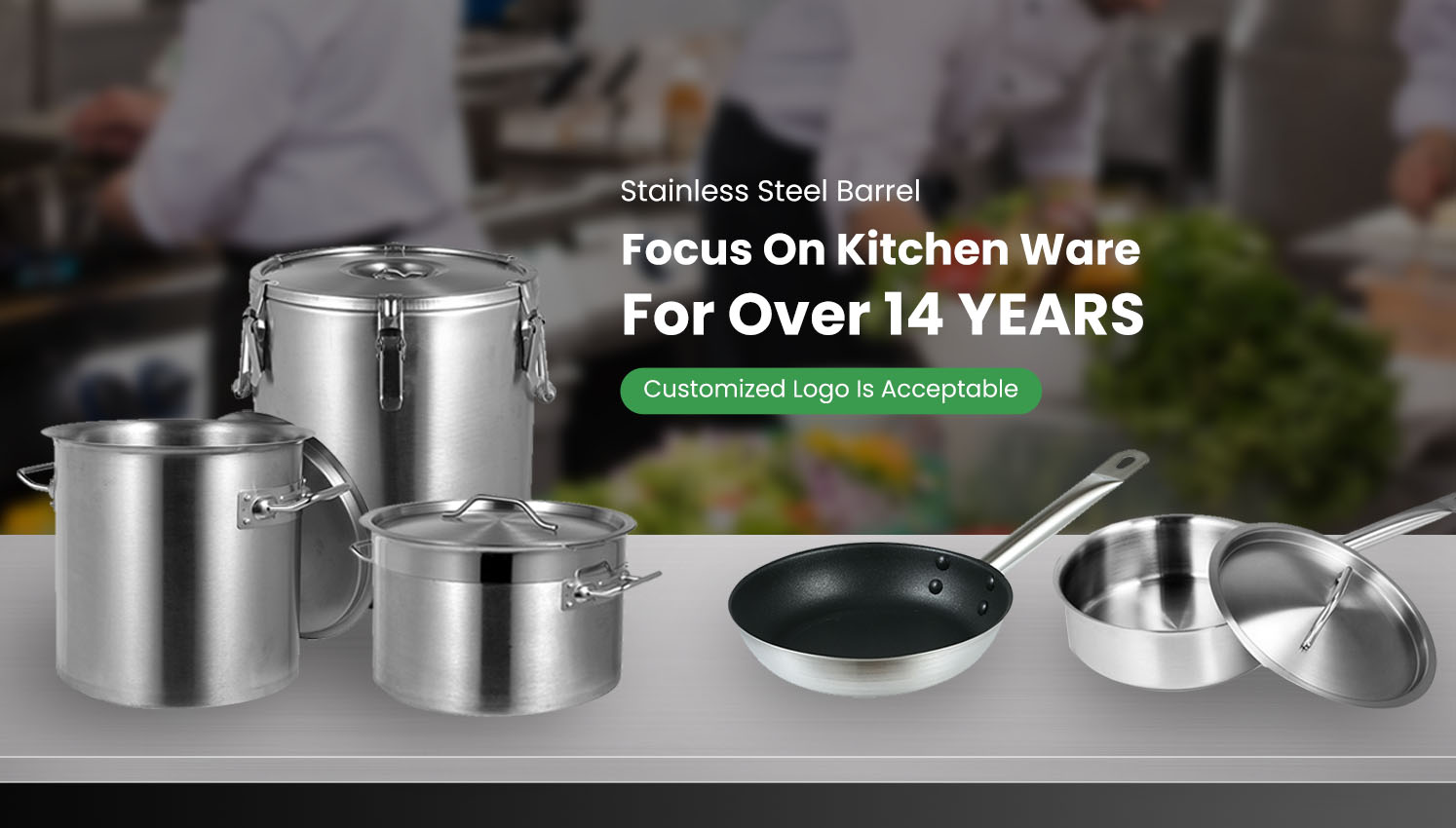
Hotel kitchens work under constant pressure. Equipment is heated, washed, moved, stacked, and used again in fast cycles. In that environment, cookware material is not a cosmetic choice. It affects heat performance, food safety, cleaning efficiency, service life, and replacement cost. For hotels, banquet operations, buffet lines, and central kitchens, the best material is usually the one that stays reliable under repeated commercial use rather than the one that looks impressive on day one.
A hotel kitchen does not use cookware the same way as a home kitchen. Pots, pans, food containers, and warming equipment are exposed to high temperatures, frequent handling, detergents, moisture, and long operating hours. A weak material may warp, discolor, corrode, or become harder to sanitize over time. A stronger material helps maintain stable kitchen workflow, cleaner presentation, and more predictable operating cost.
That is why many professional kitchens prioritize stainless steel. It offers a practical balance of corrosion resistance, structural strength, clean appearance, and ease of maintenance. This is especially important in buffet and holding equipment, where appearance and hygiene need to stay consistent during service. JUNERTE positions its product range around stainless steel kitchenware, buffet equipment, GN containers, Service Trolleys, and related catering products, with an 8,000 square meter facility, more than 45 employees, and over 200 products in its catalog.
For most hotel kitchen cookware, stainless steel is the most dependable material overall. It performs well in busy kitchens because it resists rust, handles repeated washing, and supports a professional presentation standard. It is also suitable across multiple product types, from stock pots and GN pans to buffet warmers and serving equipment.
JUNERTE’s catalog shows this clearly. Its lines cover stainless steel kitchenware, buffet warmers, soup barrels, GN pan trolleys, and Chafing Dish systems built for repeated commercial service. Several products also highlight practical features such as thickened handles, dual fuel burner layouts, hydraulic opening structures, and easy-clean surfaces, all of which matter in hotel food service operations.
Stainless steel is especially suitable for:
stock pots and soup barrels
buffet warmers and bain marie systems
hotel service trolleys
chafers and Buffet Display equipment
In banquet and buffet service, a stainless steel chafing dish is a practical example of why this material is favored. It supports heat retention, repeated cleaning, and a polished service appearance while remaining durable enough for regular event turnover. JUNERTE’s chafing dish lines include hydraulic, roll top, and economic models designed around these commercial needs.
Aluminum is known for being lightweight and responsive to heat. In some cooking applications, that can improve speed and reduce operator fatigue. However, in hotel environments, aluminum is often less attractive for front-of-house or long-term heavy-duty use because it can scratch more easily, dent under rough handling, and show wear faster. It may be useful in selected back-of-house cookware, but it usually does not deliver the same durability or presentation consistency as stainless steel.
For hotels that need unified equipment standards across kitchen prep, transport, and buffet service, stainless steel tends to create fewer maintenance and replacement issues over time.
Carbon steel and cast iron can perform very well in certain cooking tasks. They are valued for heat retention and cooking performance in specific stations. Still, they are not usually the first choice for a full hotel cookware program. They require more maintenance, are heavier to handle, and are less convenient in operations where fast cleaning and high-volume turnover matter every day.
Hotels that run multiple service formats usually benefit more from standardized stainless steel equipment because it is easier to manage across teams, shifts, and cleaning routines.
| Material | Main Advantage | Main Limitation | Best Fit in Hotel Use |
|---|---|---|---|
| Stainless steel | Durable, corrosion-resistant, easy to clean | Slower heat response than aluminum | Core cookware, GN pans, buffet equipment |
| Aluminum | Lightweight, fast heat transfer | More prone to dents and visible wear | Selected back-of-house cooking tools |
| Carbon steel | Strong cooking performance | Needs more maintenance | Specialized cooking stations |
| Cast iron | Excellent heat retention | Heavy and slower to handle | Limited specialty use |
Material choice should match the real service environment. A hotel that serves breakfast buffets, banquet events, room service, and restaurant dining needs equipment that can move across functions without becoming a maintenance burden. Buyers should evaluate heat resistance, corrosion performance, cleaning time, structural stability, edge finishing, weld quality, and whether the material keeps a consistent appearance after repeated use.
This is one area where manufacturer capability matters. JUNERTE states that it operates with in-house technical staff and equipment such as laser cutting machines, automatic welding machines, and punching machines. That kind of production control is useful for maintaining consistency in commercial kitchenware, especially when hotels need repeat orders across matching product lines.
Hotels rarely judge cookware by material cost alone. They care about how long it lasts, how easily staff can clean it, how well it presents during service, and how smoothly it fits into daily operation. Stainless steel continues to stand out because it supports all of those priorities at once. It is suitable for back-of-house efficiency and front-of-house presentation, which is difficult for many other materials to balance.
For hotel kitchens that need buffet equipment, kitchenware, GN containers, and transport solutions from one consistent product family, JUNERTE offers an advantage through its focused stainless steel range and manufacturing base. Its product categories are built around real catering use rather than isolated single items, which helps create more unified equipment planning.
The best material for hotel kitchen cookware is usually stainless steel because it delivers the most balanced performance in durability, hygiene, maintenance, and service presentation. Aluminum, carbon steel, and cast iron all have useful roles, but for large-scale hotel operations, stainless steel remains the most practical foundation.
JUNERTE’s stainless steel kitchenware and buffet equipment range is aligned with that demand, giving hotel kitchens a more consistent path for cooking, holding, transporting, and serving food with professional reliability. For teams reviewing cookware materials for upcoming hotel projects or replacement plans, a well-matched stainless steel program often brings the strongest long-term value.