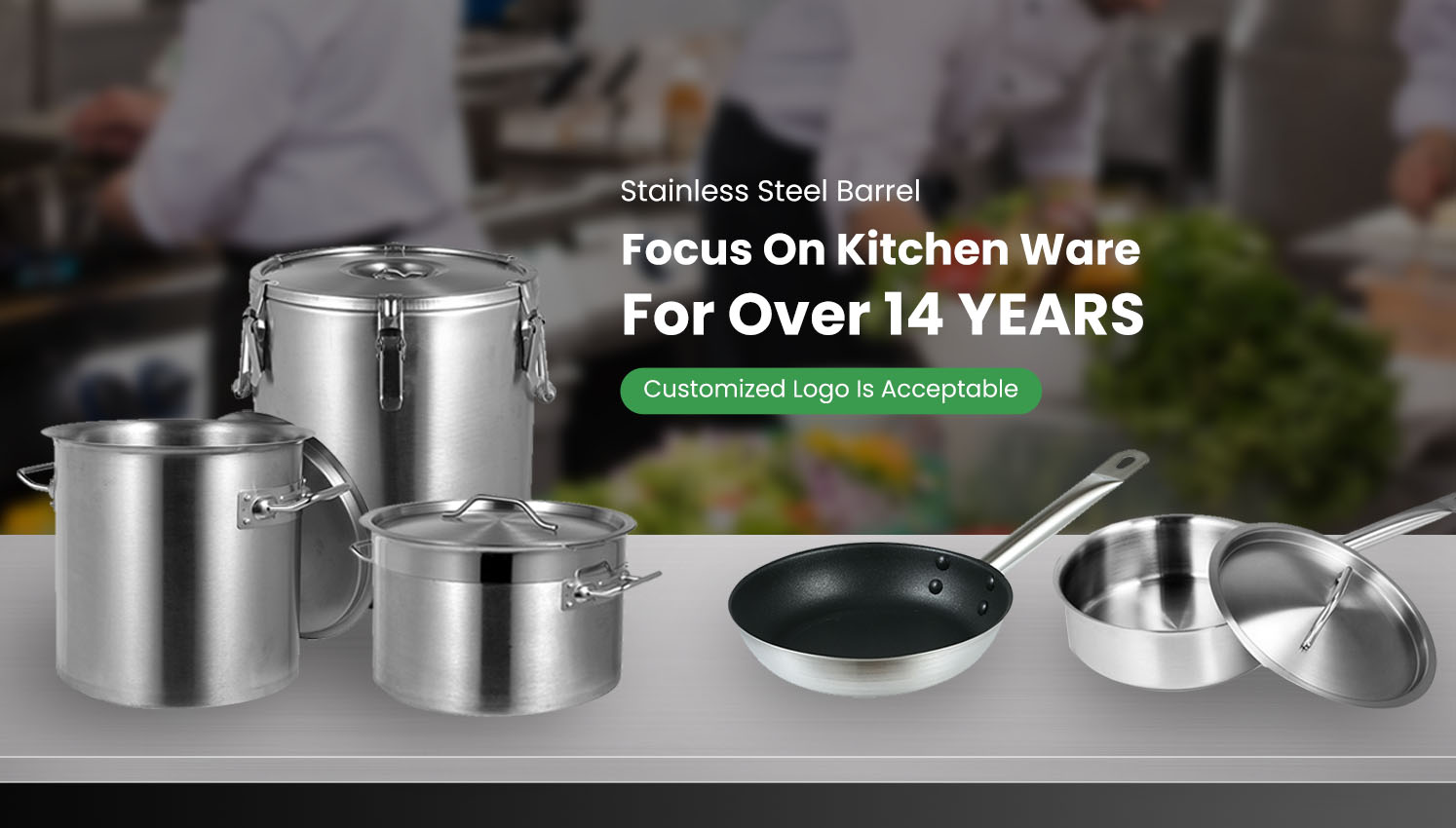
Restaurant kitchen purchasing is not only about finding equipment at a suitable price. It is about building a stable operating system for cooking, food holding, transport, storage, cleaning, and daily service. A good supplier should help kitchens reduce replacement risk, keep equipment specifications consistent, and support long-term operation across different dining formats.
JUNERTE is a stainless steel kitchenware and buffet equipment manufacturer based in Jiangmen, China. The company was established in 2016, with an 8,000 square meter factory and more than 45 employees. Its product range includes chafing dishes, Service Trolleys, Rack Trolleys, GN containers, Insulated Buckets, soup kettles, juice dispensers, bain maries, stock pots, Steamers, barrels, and other commercial kitchen products.
Many restaurants start purchasing with one urgent need, such as a service trolley, GN pan, chafing dish, or insulated container. However, kitchen equipment rarely works alone. A GN container may need to match a warmer. A service trolley may need to carry specific tray sizes. A chafing dish may need compatible pans, lids, fuel holders, and storage space.
For this reason, selecting a restaurant equipment supplier should begin with product system coverage. A supplier with only one narrow product category may solve one problem but create matching issues later. JUNERTE’s wider range of buffet and kitchen equipment helps restaurants plan serving, holding, transport, and storage products under a more consistent structure.
Stable production capability is important when the same restaurant group, distributor, or procurement team needs repeated orders. Dimensions, material thickness, finishing quality, packaging method, and product appearance should remain consistent between batches.
JUNERTE operates from its own factory, which supports more direct control over production arrangement, product inspection, and order follow-up. For buyers comparing suppliers, factory scale, production experience, equipment categories, and export communication ability should all be reviewed before placing bulk orders.
| Supplier Factor | Why It Matters | What To Check |
|---|---|---|
| Product range | Reduces matching problems | Trolleys, GN pans, chafing dishes, warmers |
| Factory capability | Supports repeat orders | Workshop size, staff, production control |
| Material control | Affects durability | Stainless steel grade, thickness, surface finish |
| Product consistency | Reduces replacement risk | Same size, same structure, same accessories |
| Packaging design | Protects equipment during shipping | Carton strength, inner protection, labeling |
| Communication process | Improves purchasing efficiency | Clear quotation, specifications, lead time |
Restaurant equipment must support safe food handling. The FDA Food Code explains that hot food holding generally requires 135°F or above, while cold holding generally requires 41°F or below. These figures are widely used in commercial food service safety management.
This does not mean every supplier must provide only heating or refrigeration products. It means the supplier should understand how equipment supports safe workflow. Chafing dishes, bain maries, insulated buckets, GN containers, and service trolleys all affect how food moves from preparation to service.
Kitchen equipment is used repeatedly under moisture, oil, heat, cleaning chemicals, and heavy handling. Poor material selection can lead to rust, deformation, loose parts, or difficult cleaning. Stainless steel remains a common choice because it is durable, corrosion resistant, and suitable for commercial food service environments.
A professional kitchen supply company should provide products with smooth surfaces, stable welding, practical handles, secure lids, and easy-clean structures. JUNERTE focuses on stainless steel kitchenware and buffet equipment, making it suitable for kitchens that need products with practical service life rather than short-term display value only.
Restaurant workflow includes preparation, cooking, holding, plating, serving, clearing, washing, and storage. A supplier should offer equipment that supports this complete movement.
Chafing dishes help present and hold food during buffet service. GN containers support food storage and portion organization. Service trolleys move plates, food pans, utensils, and used tableware. Insulated buckets help protect food temperature during transport. Rack trolleys improve storage and movement for trays and containers.
This is where a reliable kitchen equipment supplier becomes valuable. The supplier is not only selling separate items. It helps make equipment work together in a practical operating route.
Restaurants may operate in many formats. A hotel buffet needs presentation and food warming. A staff canteen needs capacity and durability. A catering team needs transport and loading efficiency. A central kitchen needs containers, trolleys, and batch handling equipment.
JUNERTE’s product categories can support different usage scenarios, including restaurant kitchens, hotel service areas, buffet counters, catering events, food transport, and commercial preparation spaces. This gives purchasing teams more flexibility when building an equipment list for multiple departments or locations.
Heavy stainless steel equipment can be damaged if packaging is weak. Dents, scratches, missing accessories, or unstable cartons can create extra cost before the equipment is even used. For overseas purchasing, packaging quality should be checked together with product quality.
A capable supplier should provide clear product packing, suitable inner protection, and organized accessory placement. Buyers should confirm carton dimensions, loading quantity, logo options, replacement part support, and shipping documentation before mass production.
Before confirming cooperation, review the supplier from an operating perspective instead of price alone.
Does the supplier cover the main equipment categories needed by the kitchen
Are product dimensions suitable for existing counters, trolleys, and storage racks
Can the supplier keep consistent specifications for repeat orders
Is the stainless steel structure practical for repeated cleaning
Are chafing dishes, GN containers, trolleys, and insulated containers available together
Can packaging protect products during long-distance transportation
Is communication clear for quotation, samples, production, inspection, and delivery
This checklist can work as a simple choose restaurant supplier guide for procurement planning.
A good supplier should understand that restaurant equipment must be practical, cleanable, durable, and easy to replace. Low initial price may not be the best choice when products deform, mismatch, or require frequent replacement.
JUNERTE’s advantage is its focused commercial kitchen equipment range and manufacturing background. Its products are not limited to one serving item. They cover buffet heating, food storage, kitchen transport, insulated holding, and stainless steel preparation needs. This makes it easier to create a stable purchasing system for restaurants, hotels, catering operations, and wholesale channels.
Choosing a restaurant kitchen equipment supplier should start from workflow, product matching, quality consistency, and long-term supply stability. Price is important, but it should be judged together with material, structure, cleaning convenience, packaging, and after-order support.
The right catering equipment distributor or manufacturer partner should help reduce purchasing complexity. With chafing dishes, service trolleys, GN containers, insulated buckets, soup kettles, bain maries, and related stainless steel kitchenware, JUNERTE offers a practical equipment supply option for commercial food service operations.