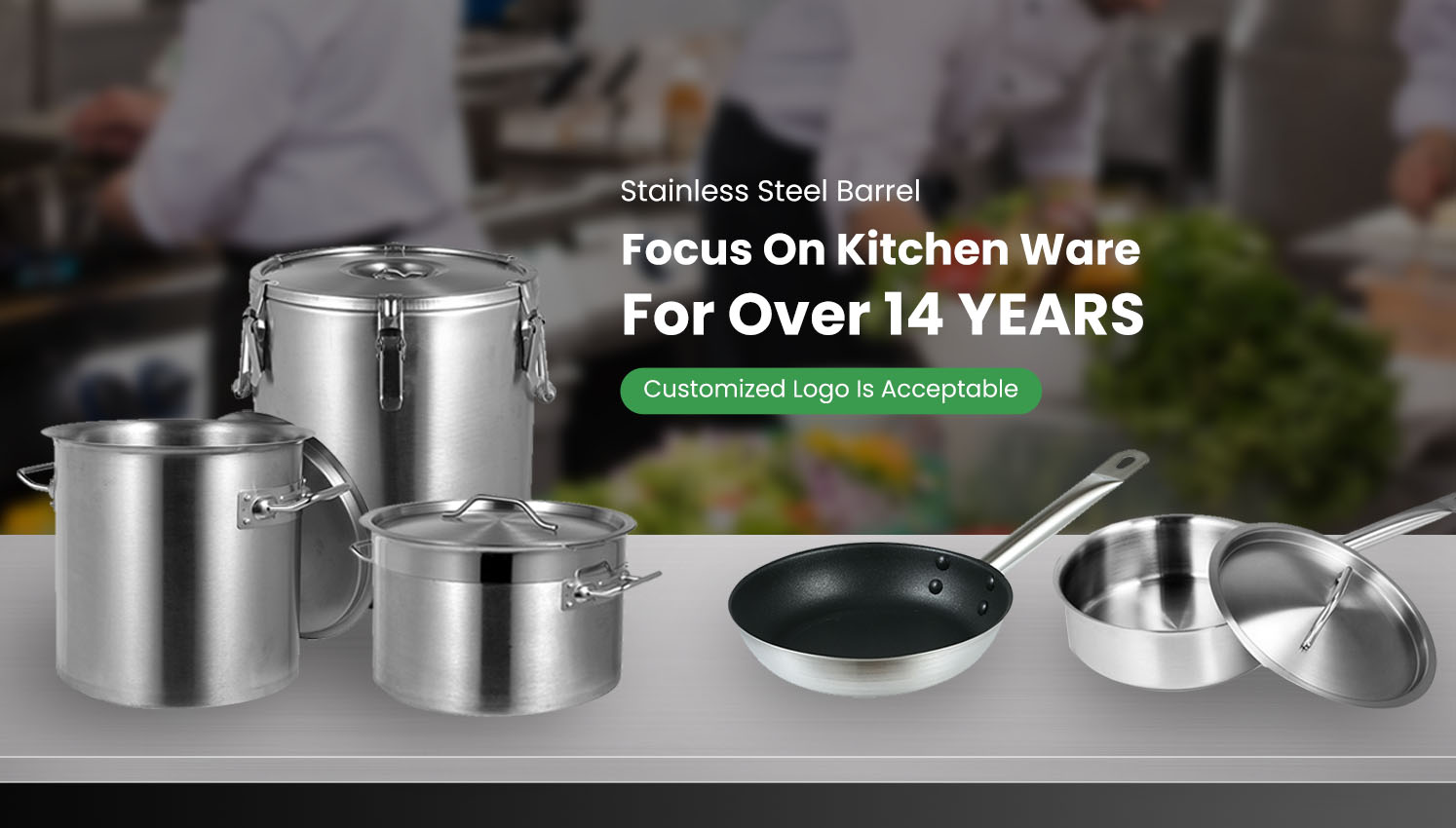
Selecting stainless steel kitchen equipment is not only about choosing products that look clean and professional. For restaurants, hotels, catering kitchens and food service projects, the right equipment affects daily workflow, food hygiene, operating safety, maintenance cost and long-term return on investment. Many buyers focus only on price at the beginning, but later find that poor material thickness, weak welding, unstable structures or unsuitable sizes can increase replacement cost and delay kitchen operation. Therefore, equipment selection should start from actual use conditions, not only from product appearance.
Different kitchens require different equipment standards. A small café may need compact preparation tables, storage shelves and sinks, while a central kitchen or hotel buffet area needs heavy duty kitchenware, commercial cookware sets and large-capacity stainless steel workstations. Before selecting equipment, buyers should confirm the cooking volume, cleaning frequency, food type, available space and staff movement route.
For example, kitchens with high moisture should use stainless steel with better corrosion resistance. Areas exposed to salt, sauce or acidic food need stronger surface protection. If the equipment will carry heavy pots, trays or ingredients every day, the structure must be reinforced with stable legs, cross bars and thicker panels.
Material Grade Common commercial kitchen equipment uses 201, 304 or 316 stainless steel. For general dry storage, 201 stainless steel may be acceptable. For sinks, food contact areas and humid kitchens, 304 stainless steel is more widely used because it provides better rust resistance and hygiene performance.
Thickness and Load Capacity Heavy duty kitchenware should not be judged only by surface brightness. Panel thickness, tube size and support design are more important. A stainless steel worktable used in a busy restaurant should normally have enough thickness to resist bending, vibration and deformation during cutting, preparation and storage.
Welding and Edge Treatment Smooth welding, rounded edges and polished corners reduce cleaning difficulty and lower the risk of scratching workers’ hands. Poor welding may trap grease and water, which can cause hygiene problems over time.
Size Matching Equipment should match the kitchen layout. Oversized products waste space, while undersized equipment reduces working efficiency. Before ordering, buyers should confirm length, width, height, door opening direction and installation clearance.
| Selection Factor | What to Check | Why It Matters |
|---|---|---|
| Stainless steel grade | 201, 304, 316 | Affects corrosion resistance |
| Panel thickness | Worktop and shelf thickness | Affects load bearing |
| Surface finish | Brushed, polished, matte | Affects cleaning and appearance |
| Structure | Legs, supports, welding | Affects stability |
| Custom size | Layout matching | Affects installation efficiency |
Commercial kitchen equipment is cleaned frequently, so easy maintenance is important. Brushed stainless steel surfaces are popular because they are practical and easier to maintain than mirror surfaces. Buyers should also check whether the equipment has removable parts, smooth corners and accessible gaps. These details reduce cleaning time and help kitchens maintain hygiene standards.
When selecting stainless steel kitchen equipment, the supplier’s production capability is as important as the product itself. A reliable supplier should provide clear drawings, material options, packaging methods, quality inspection standards and stable delivery schedules. For bulk orders, buyers should also confirm whether the supplier can support OEM sizes, logo customization, export packaging and mixed container loading.
The best stainless steel kitchen equipment should match the kitchen’s real working conditions. Buyers should compare material grade, thickness, structure, finish, packaging and supplier service together. Choosing heavy duty kitchenware with suitable specifications may cost more at the beginning, but it can reduce repair frequency, improve kitchen efficiency and support long-term commercial use.