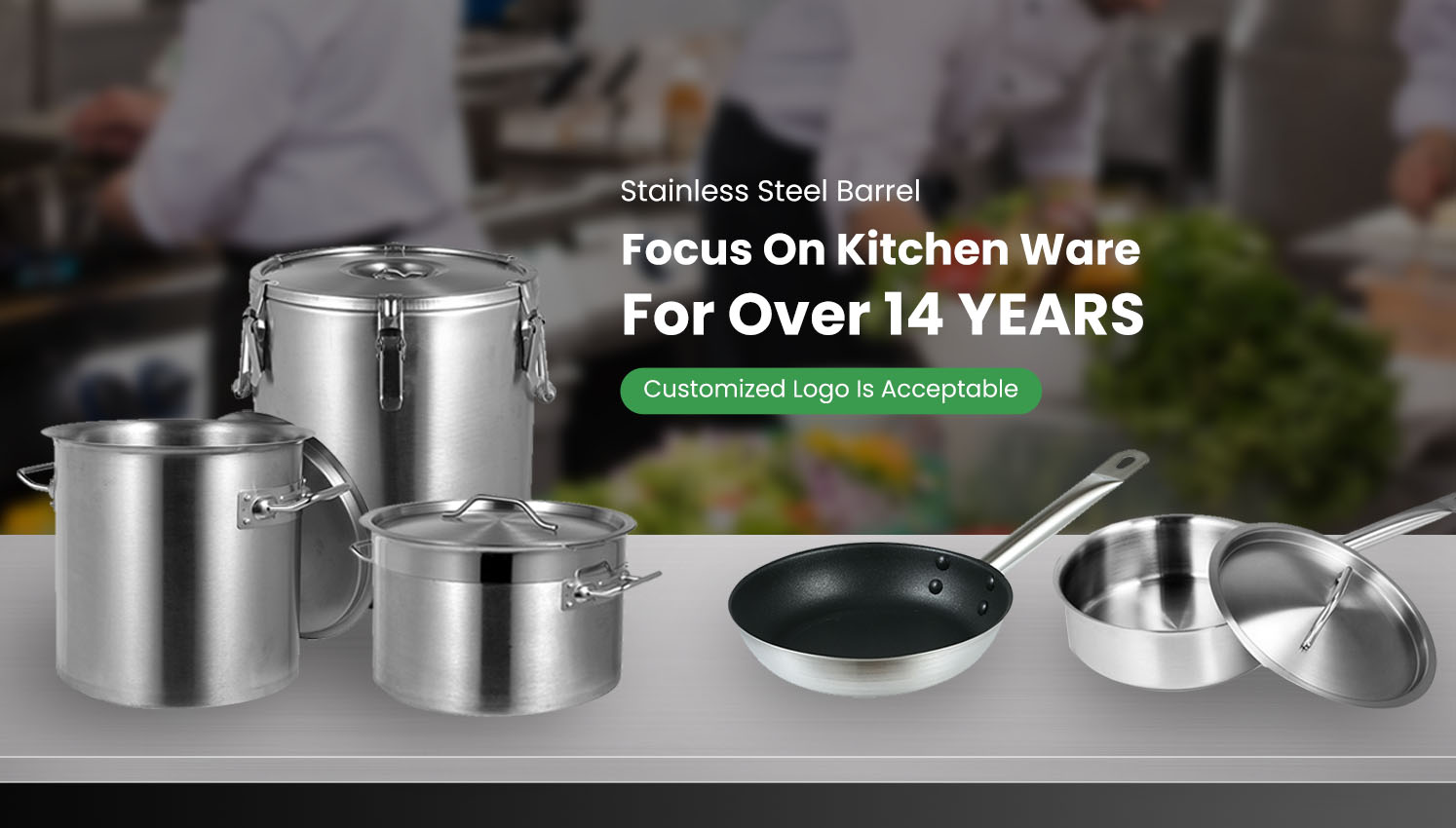
Choosing the best material for catering equipment depends on the working environment, food contact requirements, cleaning frequency and budget. There is no single material suitable for every kitchen product. However, stainless steel is widely used in commercial kitchens because it offers good hygiene, strength, corrosion resistance and easy cleaning. For buyers, catering equipment material selection should balance performance, cost and application.
Stainless steel cookware and kitchen equipment are popular because they can handle moisture, heat, food contact and frequent washing. Compared with many other materials, stainless steel is stronger, cleaner and more suitable for long-term commercial use. It is commonly used for worktables, sinks, shelves, cabinets, trolleys, cookware and buffet equipment.
| Material | Common Application | Advantage | Limitation |
|---|---|---|---|
| 201 stainless steel | Dry shelves, economy products | Lower cost | Lower corrosion resistance |
| 304 stainless steel | Sinks, tables, cookware | Better hygiene and rust resistance | Higher cost |
| 316 stainless steel | Special wet or salty areas | Strong corrosion resistance | More expensive |
| Aluminum | Lightweight items | Light and easy to move | Lower strength for heavy use |
| Plastic | Accessories, trays, containers | Low cost and light | Not suitable for all heat areas |
| Glass | Lids, display parts | Good visibility | Fragile in shipping |
304 stainless steel is often a good option because it is easy to clean and suitable for food contact. Thickness and structure should also be checked.
Wet areas need better corrosion resistance. 304 stainless steel is commonly used, while 316 may be considered for special conditions.
For dry storage, 201 or 304 stainless steel may both be used depending on budget and environment. Heavy storage requires stronger structure.
Stainless steel cookware should have good heat resistance, safe food contact performance and suitable thickness. Commercial cookware sets need stronger handles and stable base design.
Buffet equipment may combine stainless steel, glass and heating components. Buyers should check both appearance and safety.
The best material catering equipment choice is not always the most expensive one. Buyers should select material according to real use. Using 316 stainless steel for every product may increase cost unnecessarily. Using low-cost material in wet or food contact areas may cause rust and replacement problems.
Before ordering, buyers should confirm:
Exact material grade
Product thickness
Surface finish
Food contact suitability
Cleaning recommendations
Packaging method
Customization options
These details help avoid misunderstanding and make price comparison more accurate.
For most commercial kitchen materials, 304 stainless steel is a practical choice for food contact and wet areas. 201 stainless steel may be used for some dry and cost-sensitive applications. 316 stainless steel is suitable for harsher environments. The best decision should consider use condition, hygiene needs, budget and expected lifespan.
A suitable material choice helps catering equipment perform better, last longer and support safer kitchen operation.