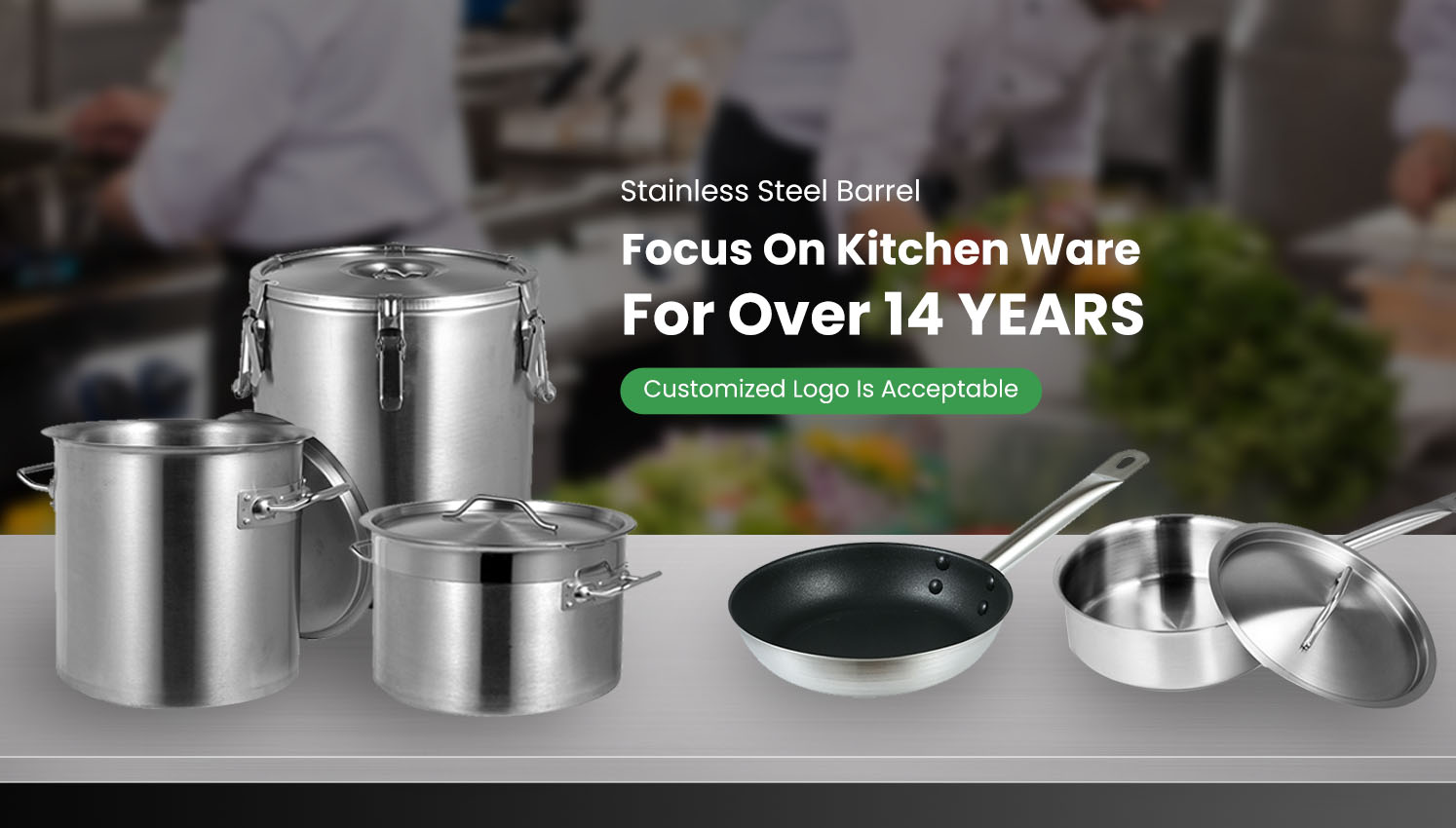
Heavy duty kitchen equipment is important because commercial kitchens operate under continuous pressure. Unlike home kitchens, restaurants, hotels, canteens, catering centers and food service projects need equipment that can handle long working hours, repeated cleaning, heavy loading and frequent movement. If the equipment is not strong enough, it may bend, rust, loosen or fail early, which directly affects kitchen efficiency and operating cost.
Commercial kitchens often prepare large quantities of food every day. Worktables may hold heavy ingredients, cookware and cutting tools. Storage racks may carry pots, pans, trays and food containers. Trolleys may move between preparation areas, cooking zones and service areas many times per shift.
This is why heavy duty kitchen equipment needs stronger material, stable structure and reliable load-bearing design. Commercial grade cookware and durable kitchen tools are not only about appearance. They must support real kitchen workloads.
Durability affects more than product lifespan. It also influences safety, hygiene and daily workflow. Weak equipment may cause unstable operation, while damaged surfaces can become harder to clean. Once equipment needs frequent repair, the kitchen may face downtime, higher labor pressure and delayed service.
| Importance Area | How Heavy Duty Equipment Helps |
|---|---|
| Kitchen safety | Reduces shaking, bending and collapse risk |
| Workflow efficiency | Supports stable daily operation |
| Hygiene control | Smooth stainless steel surfaces are easier to clean |
| Cost control | Reduces repair and replacement frequency |
| Project reliability | Helps maintain consistent service capacity |
When selecting heavy duty kitchen equipment, buyers should check material grade, thickness, welding quality, support frame and accessory strength. For wet areas, 304 stainless steel is often preferred because it offers better corrosion resistance. For storage shelves and trolleys, tube size, wheel quality and reinforced joints are especially important.
A low-cost product may seem attractive at first, but if it uses thin material or weak structure, replacement cost may be higher later. Commercial kitchen durability needs should be judged by total use cost, not only purchase price. Stronger equipment can help reduce maintenance, returns and project complaints.
Heavy duty equipment is useful in preparation areas, cooking zones, washing rooms, storage spaces and buffet service areas. For example, reinforced trolleys improve transport efficiency, strong shelving systems organize cookware safely, and thick stainless steel worktables support high-frequency food preparation.
Heavy duty kitchen equipment is important because it protects kitchen efficiency, safety and long-term investment. Buyers should choose equipment based on workload, material, structure and supplier reliability. Durable kitchen tools and commercial grade cookware help kitchens operate more smoothly and reduce unnecessary repair costs.