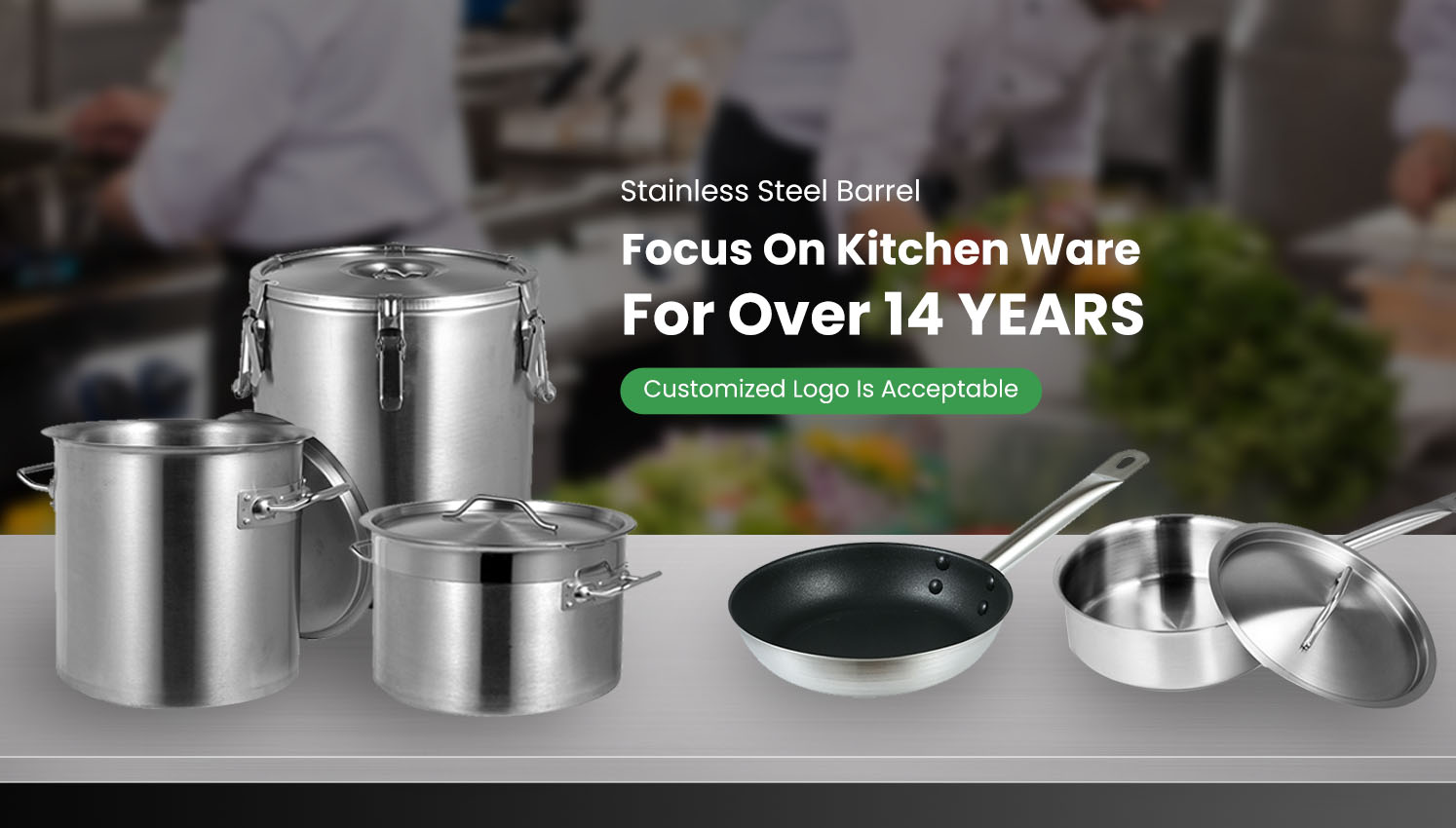
Commercial kitchen equipment must support busy food service operations. It should be strong, hygienic, easy to clean, safe to use and suitable for different kitchen layouts. Whether the product is a stainless steel worktable, storage rack, sink, trolley, cookware set or buffet equipment, buyers should evaluate its practical features instead of only looking at product photos.
Material is one of the most important commercial kitchen equipment features. Stainless steel is widely used because it is clean, corrosion resistant and easy to maintain. For wet areas and food contact surfaces, 304 stainless steel is commonly selected. For dry storage or cost-sensitive applications, other stainless steel grades may also be used depending on the environment.
Catering equipment specifications should include thickness, frame design and load capacity. A worktable needs stable legs and reinforced panels. A trolley needs strong wheels and handles. A shelf needs enough support bars to carry cookware and ingredients safely.
Commercial kitchens require frequent cleaning. Equipment should have smooth surfaces, rounded edges, polished welding and fewer hidden gaps. This helps reduce grease buildup and cleaning time.
Industrial kitchen tools should reduce safety risks. Sharp edges, unstable frames, weak wheels or poor welding may cause accidents. Buyers should check edge treatment, balance, braking function and product stability.
Good equipment should match kitchen workflow. Size, height, door direction and movement space all affect daily efficiency. Custom sizes may be needed for hotels, restaurants, school kitchens or catering projects.
| Key Feature | What to Check | Buyer Value |
|---|---|---|
| Material | Stainless steel grade | Hygiene and corrosion resistance |
| Thickness | Panel and tube size | Better strength |
| Welding | Smooth joint quality | Longer service life |
| Surface | Brushed or polished finish | Easier cleaning |
| Mobility | Wheel and brake design | Flexible operation |
| Packaging | Export protection | Lower damage risk |
Small parts also affect equipment quality. Screws, handles, hinges, wheels, trays and drain parts should be strong and easy to replace. Weak accessories can shorten the product lifespan even if the main body is strong.
For bulk purchasing, buyers may need logo branding, special dimensions, carton customization or different material options. A supplier with customization capability can better support project needs and market requirements.
The key features of commercial kitchen equipment include suitable material, strong structure, easy cleaning, safe operation, layout compatibility and stable accessories. Buyers should use a complete commercial kitchen equipment guide when comparing products, so they can choose equipment that performs reliably in real working conditions.