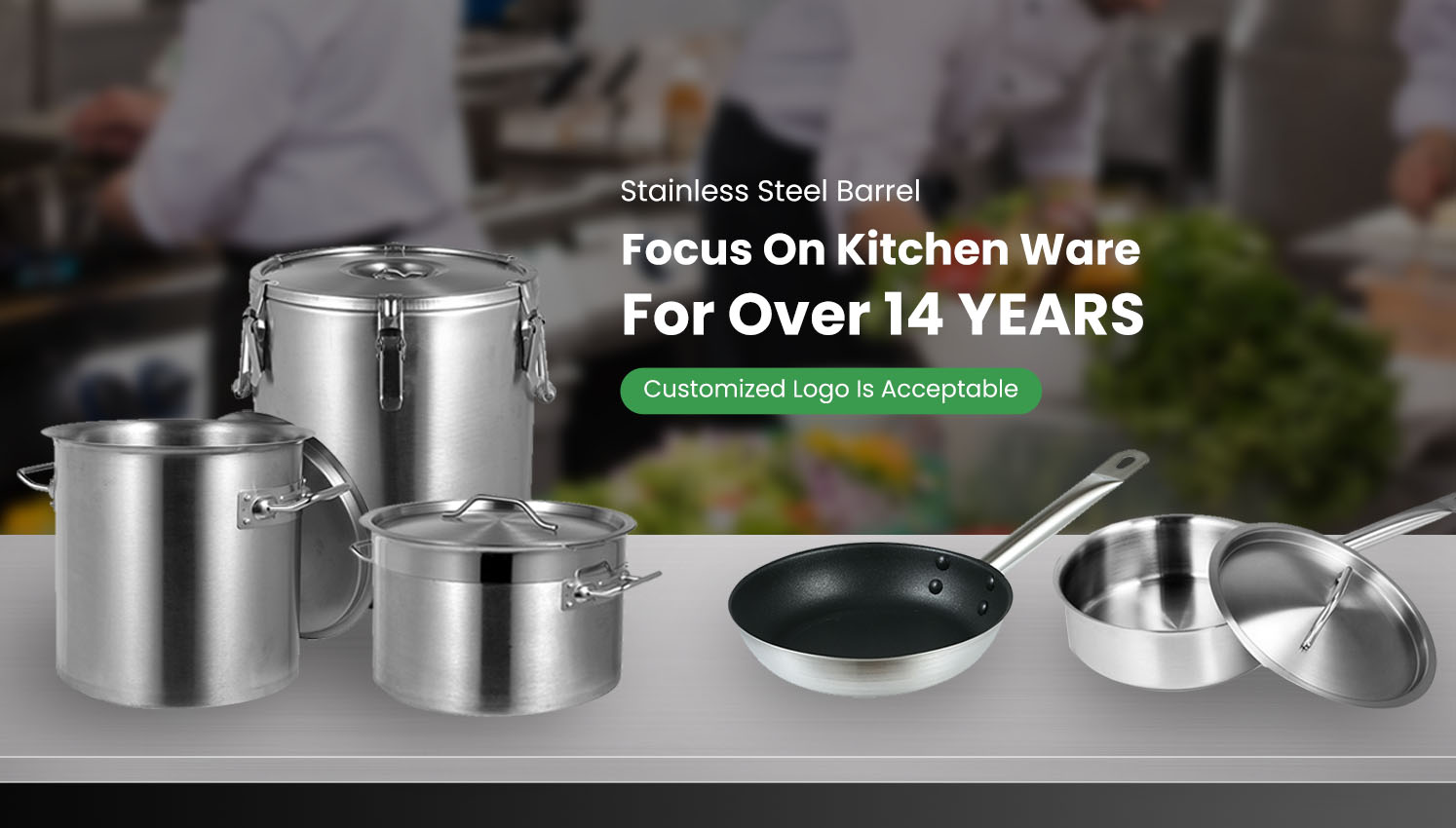
A saute pan is a versatile piece of cookware designed for cooking ingredients quickly and evenly over direct heat. Its wide, flat bottom provides enough surface area for browning meat, cooking vegetables, and preparing sauces, while its relatively tall, straight sides help contain liquids and prevent food from spilling during stirring. Although it may look similar to a Frying Pan or skillet, a saute pan has several distinctive features that make it useful for a wider range of cooking techniques.
Understanding what a saute pan is, how it differs from other cookware, and when to use it can help home cooks select the right pan for everyday meals and more demanding recipes.
A saute pan is a type of cooking pan characterized by a flat bottom, straight sides, and a long handle. Most models also include a fitted lid, allowing food to be cooked using both direct heat and trapped steam.
The name comes from the French word sauter, meaning to jump. It describes a cooking technique in which ingredients are moved quickly in a hot pan, allowing them to cook evenly while developing a browned exterior.
Unlike cookware with sloped sides, a saute pan has a more vertical cooking surface. This design provides greater usable capacity and makes it easier to combine ingredients with liquids, butter, or sauces.
Common characteristics include:
A broad, flat cooking surface for distributing ingredients.
Straight sides that help prevent splashing.
A long handle for lifting and controlling the pan.
A lid for retaining heat and moisture.
A relatively deep body for cooking larger portions.
Some larger models also feature a short helper handle opposite the main handle, making the pan easier to lift when it contains food.
The combination of a wide base and deep sides makes a saute pan suitable for several cooking methods. It is not limited to sauteing vegetables or meat.
Sauteing vegetables
A wide cooking surface allows vegetables to spread across the bottom rather than piling up. This helps ingredients cook more evenly and develop a lightly browned surface. Mushrooms, onions, peppers, and zucchini are particularly suitable.
Cooking meat and poultry
Chicken breasts, pork chops, and smaller cuts of beef can be browned directly in the pan. The straight sides also help contain oil and cooking juices.
Making pan sauces
After browning meat, the remaining flavorful residue can be used to prepare sauces. Add stock, wine, butter, or other suitable liquids and scrape the bottom gently to incorporate the browned ingredients.
Braising
A saute pan with a fitted lid can be used for braising. Ingredients are first browned over direct heat, then cooked slowly with a small amount of liquid.
Cooking pasta dishes
Its depth makes the pan useful for combining cooked pasta with sauces, vegetables, and other ingredients without spilling during mixing.
Although these two pans can perform some of the same tasks, their structures influence how they are used.
A traditional frying pan usually has sloped sides and a relatively shallow body. This makes it convenient for flipping pancakes, turning eggs, and moving ingredients with a spatula.
A saute pan has straight sides and greater depth, providing more room for liquids and larger food portions.
| Feature | Saute Pan | Frying Pan |
|---|---|---|
| Side design | Straight and relatively tall | Sloped and shallow |
| Cooking surface | Broad and flat | Broad and flat |
| Capacity | Generally greater | Generally smaller |
| Liquid cooking | Convenient | More limited |
| Flipping food | Less convenient | Easier |
| Common uses | Sauteing, braising, sauces | Frying, searing, eggs |
Neither design is universally better. A frying pan is often more convenient for quick, shallow cooking, while a saute pan offers greater versatility when recipes involve liquids or multiple ingredients.
The terms are sometimes used interchangeably, but traditional designs can differ.
A classic saute pan generally has straight sides and a wide, flat base. A sauteuse, sometimes called a rondeau-style pan depending on its construction, may have more rounded sides that create a smoother transition between the bottom and the walls.
This difference affects how food moves during stirring and how easily ingredients can be transferred from the pan.
For home cooking, the terminology may vary between cookware collections. Checking the actual shape, depth, and dimensions is more useful than relying on the product name alone.
The material affects how quickly the pan heats, how well it retains temperature, and how much maintenance it requires.
Stainless steel saute pans are popular because they are durable, resistant to ordinary corrosion, and suitable for many cooking methods.
They generally do not have a nonstick coating, so controlling heat and using an appropriate amount of cooking fat can help prevent food from sticking.
Some models feature an aluminum or copper core to improve heat distribution.
Aluminum pans are relatively lightweight and conduct heat efficiently. They respond quickly to temperature adjustments, making them useful when cooking ingredients that require precise heat control.
Some aluminum cookware has a nonstick coating or an anodized surface to improve cooking performance and durability.
Cast iron retains heat effectively and can maintain a stable cooking temperature once properly heated.
However, it is heavier than most other cookware materials and requires appropriate seasoning and drying to prevent rust.
Copper offers excellent thermal conductivity and responds quickly to changes in heat.
Many copper saute pans include a stainless steel interior lining because unlined copper is not suitable for every type of food preparation.
Saute pans are available in several diameters, commonly measured across the upper rim.
The appropriate size depends on the number of people being served, the quantity of ingredients, and available cooking space.
| Pan Diameter | Typical Cooking Application |
|---|---|
| 8 inches | Small portions and side dishes |
| 10 inches | Everyday meals for one or two people |
| 12 inches | Family meals and multiple ingredients |
| 14 inches | Larger portions and batch cooking |
These are general size references. Actual capacity also depends on the pan's depth and internal dimensions.
A pan that is too small may cause ingredients to overlap, producing steam instead of the desired browning. An unnecessarily large pan may take longer to heat and occupy more storage space.
For everyday household cooking, a 10- or 12-inch saute pan is often a practical starting point.
The best saute pan should match your cooking habits rather than simply having the largest capacity or most expensive material.
Pay attention to the following details:
Base construction: A thick, flat base can help distribute heat more consistently and reduce hot spots.
Handle comfort: The handle should provide a secure grip and remain manageable when the pan contains food.
Lid design: A well-fitting lid helps retain moisture and heat during simmering and braising.
Weight: Consider whether you can comfortably lift the pan when it is full.
Cooktop compatibility: Check whether the pan is suitable for gas, electric, ceramic, or induction cooking.
Cleaning requirements: Some materials and coatings require more careful cleaning than others.
Also check whether the handle and lid are oven-safe if you plan to move the pan from the stovetop into the oven.
Good cooking results depend on controlling temperature and avoiding overcrowding.
Start by preheating the pan according to its material and cooking requirements. Add an appropriate amount of oil or butter, then place the ingredients in a single layer whenever possible.
Allow food to develop a browned surface before moving it too frequently. Constant stirring can prevent proper browning, especially when cooking meat or mushrooms.
When preparing sauces, reduce the heat before adding liquids if necessary. Use a wooden or heat-resistant utensil when required by the pan's surface coating.
For braising, brown the ingredients first, add the cooking liquid, cover with the lid, and continue cooking at a lower temperature.
Proper maintenance helps preserve the cooking surface and extend the pan's useful life.
After cooking, allow the pan to cool to a safe temperature before washing. Avoid exposing extremely hot cookware to cold water because sudden temperature changes can cause warping.
Use a suitable dishwashing detergent and a non-abrasive sponge for routine cleaning. For stubborn food residue, soaking the pan in warm water can make cleaning easier.
Different materials require different care:
Stainless steel can generally withstand regular washing, but abrasive cleaning should be controlled.
Nonstick coatings require soft utensils and non-abrasive cleaning tools.
Cast iron should be dried thoroughly and maintained according to its seasoning requirements.
Copper may require occasional exterior polishing to preserve its appearance.
Always follow the cookware manufacturer's cleaning recommendations.
A saute pan is a practical addition to a kitchen because it combines the wide cooking surface of a frying pan with the deeper structure needed for sauces, braising, and larger food portions.
Its straight sides, flat base, and optional lid make it suitable for a variety of everyday cooking tasks. When choosing one, consider the material, diameter, weight, handle design, and compatibility with your cooktop.
With the right size and proper maintenance, a saute pan can become one of the most frequently used pieces of cookware in the kitchen.
Previous: Refrigerated Milk Dispenser
Next: Kitchen Speed Rack