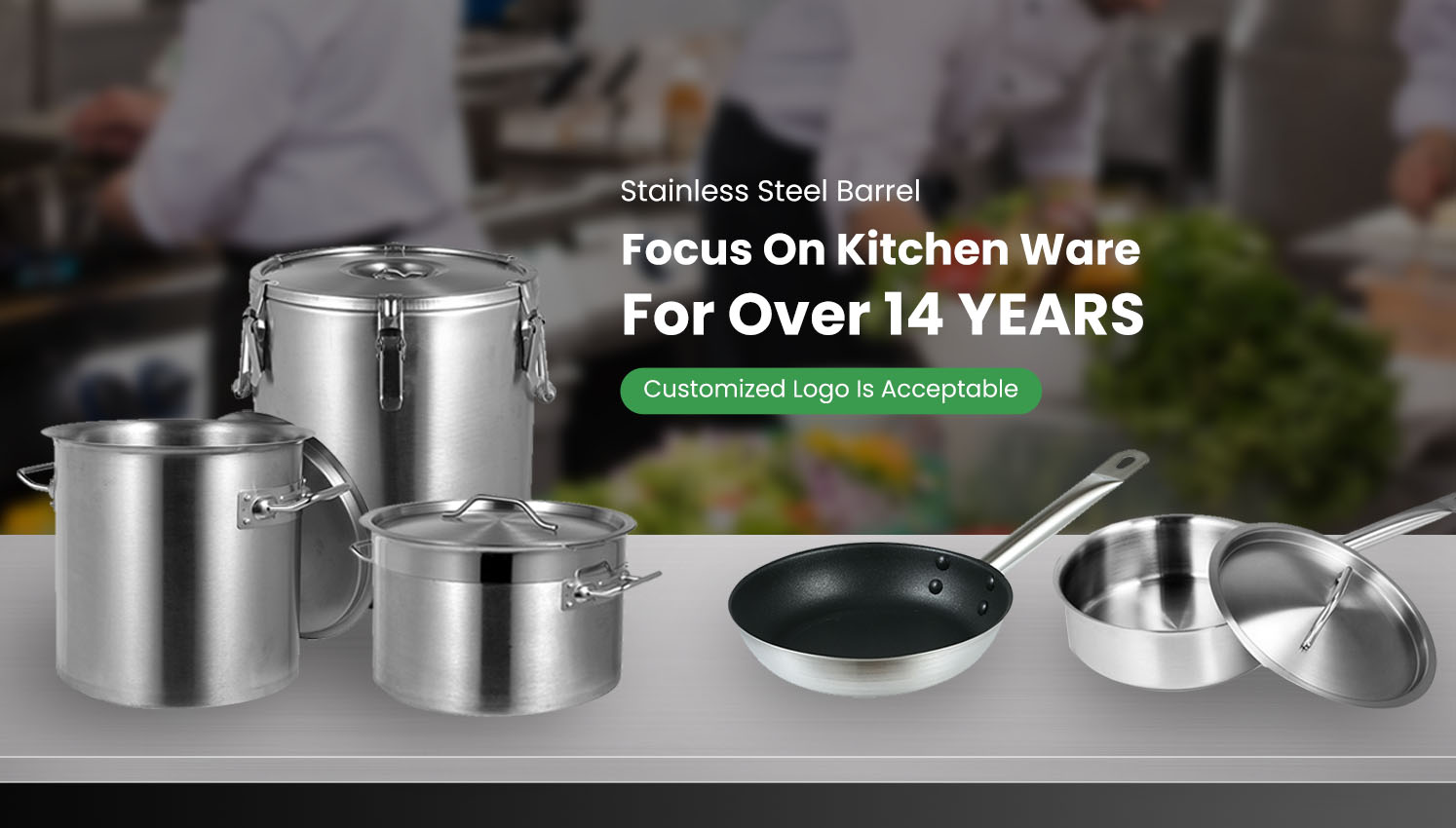
Stainless steel Barrels are widely used across commercial kitchens, food processing facilities, hospitality venues, and industrial environments. Compared with plastic or coated metal alternatives, they are often considered a premium solution. But are commercial stainless steel barrels truly better? The answer depends on performance requirements, hygiene standards, durability expectations, and long-term operating costs. This article provides a comprehensive analysis of stainless steel barrels in commercial use, explaining their advantages, limitations, and ideal application scenarios.
Commercial stainless steel barrels are containers manufactured from food-grade or industrial-grade stainless steel, commonly used for storage, transport, waste handling, ingredient preparation, or liquid containment. Their popularity stems from their ability to perform reliably in demanding environments where hygiene, strength, and longevity are critical.
In professional kitchens and foodservice operations, stainless steel barrels are often used for ingredient storage, food waste collection, or liquid handling. In industrial settings, they may store chemicals, raw materials, or process by-products.
One of the strongest advantages of stainless steel barrels is durability. Stainless steel offers high mechanical strength, allowing barrels to withstand impacts, heavy loads, and frequent movement without cracking or deformation. This is particularly important in busy commercial environments where containers are handled repeatedly throughout the day.
Unlike plastic barrels, which may become brittle over time, stainless steel maintains structural integrity even under temperature fluctuations and long-term use. This durability reduces replacement frequency and supports continuous operation.
Hygiene is a major concern in commercial kitchens and food processing facilities. Stainless steel has a non-porous surface, which prevents bacteria, odors, and residues from penetrating the material. This makes cleaning more effective and helps maintain consistent sanitation standards.
Stainless steel barrels are compatible with hot water cleaning, steam sanitation, and a wide range of food-safe cleaning agents. Their resistance to corrosion ensures that the surface remains smooth and easy to sanitize over time, reducing the risk of contamination.
Stainless steel barrels offer excellent resistance to corrosion, moisture, and many chemicals. This makes them suitable for environments where containers are exposed to water, oils, acids, or cleaning solutions on a daily basis.
In contrast, coated metal barrels may suffer from surface damage over time, leading to rust formation. Plastic barrels can degrade when exposed to certain chemicals or UV light. Stainless steel maintains performance stability in both indoor and outdoor commercial environments.
Commercial stainless steel barrels perform well across a wide temperature range. They can safely handle hot liquids, cold storage, and rapid temperature changes without warping or losing strength.
This temperature resistance makes stainless steel barrels highly versatile. They can be used in cooking preparation areas, cold storage rooms, dishwashing zones, and even outdoor service areas without performance compromise.
In commercial spaces, appearance matters. Stainless steel barrels provide a clean, professional look that aligns well with modern kitchen and industrial design standards. Their metallic finish conveys durability, cleanliness, and operational discipline.
This visual consistency is particularly valuable in open kitchens, food production facilities, and hospitality environments where equipment is visible to staff or customers.
Although stainless steel barrels typically have a higher initial purchase cost than plastic alternatives, they often offer better long-term value. Their extended service life, lower maintenance needs, and resistance to damage reduce overall replacement and repair costs.
For businesses operating on tight schedules and strict hygiene standards, the reduced downtime and consistent performance of stainless steel barrels contribute to operational efficiency and cost stability.
| Feature | Stainless Steel Barrels | Plastic Barrels | Coated Metal Barrels |
|---|---|---|---|
| Durability | High | Medium | Medium |
| Hygiene | Excellent | Moderate | Moderate |
| Corrosion resistance | Excellent | Good | Limited |
| Temperature tolerance | Wide range | Limited | Moderate |
| Service life | Long-term | Short to medium | Medium |
| Appearance | Professional | Basic | Industrial |
This comparison highlights why stainless steel barrels are often chosen for demanding commercial applications.
Stainless steel barrels are particularly well-suited for commercial kitchens, catering operations, food processing plants, beverage production, and hospitality venues. They are also widely used in industrial facilities that require stable, corrosion-resistant containers for liquids or raw materials.
In environments where hygiene audits, durability, and consistent performance are non-negotiable, stainless steel barrels provide clear advantages over alternative materials.
Quality depends not only on material but also on manufacturing standards. Well-designed barrels feature smooth welding, reinforced rims, stable bases, and balanced weight distribution. These details affect daily usability and long-term performance.
Commercial stainless steel barrels from JUNERTE are designed to meet professional kitchen and commercial operation requirements, offering durable construction, hygienic surfaces, and reliable performance for demanding use environments.
Commercial stainless steel barrels are often better than plastic or coated metal alternatives when durability, hygiene, temperature resistance, and long-term value are priorities. While the initial investment may be higher, their extended lifespan and reliable performance make them a practical choice for professional environments.
For businesses seeking stable operation, consistent sanitation, and a professional equipment standard, stainless steel barrels represent a strong and future-proof solution.
Previous: How to Clean a Juice Dispenser?