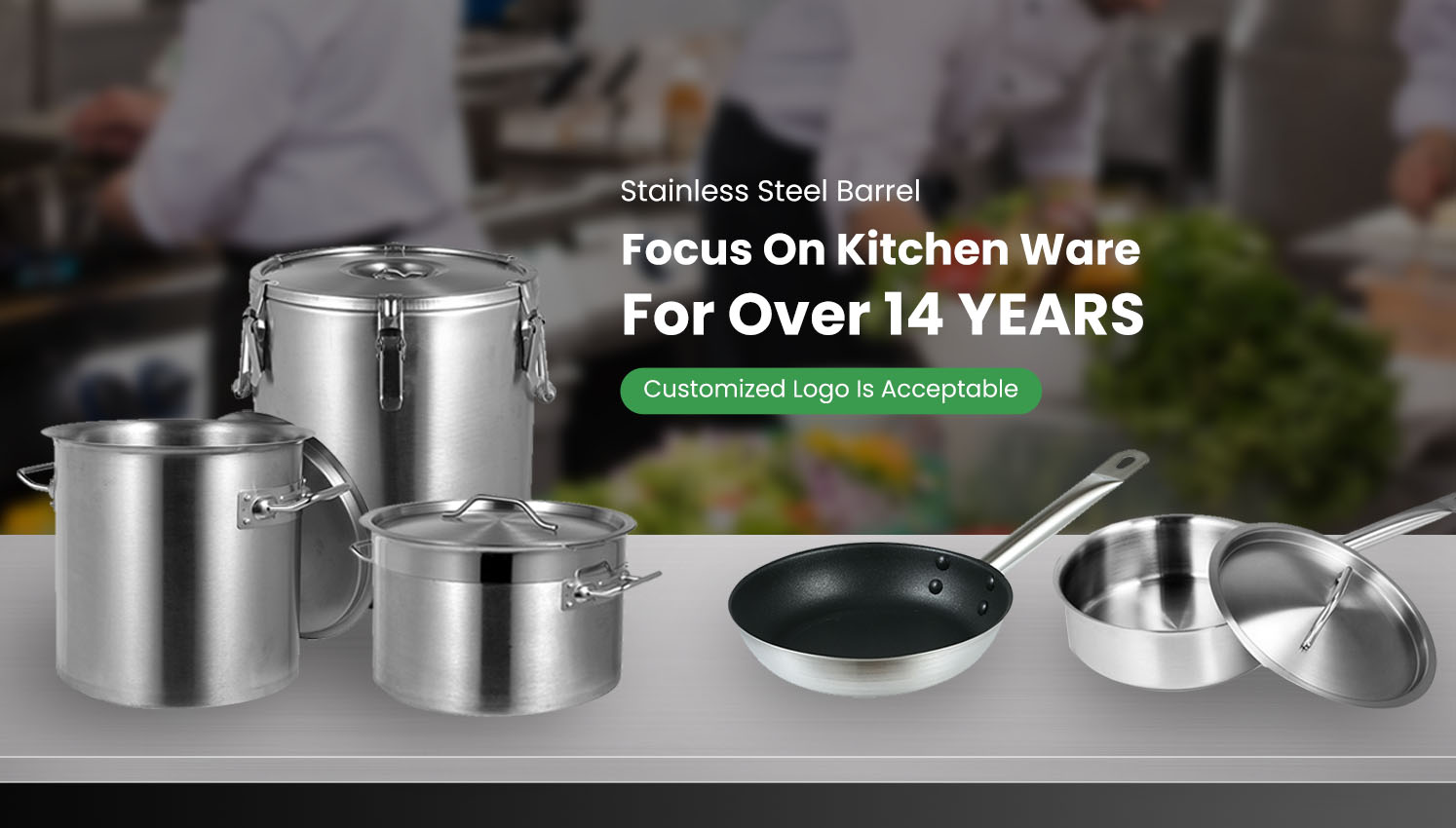
Food grade stainless steel refers to stainless steel materials that are suitable for contact with food, water and kitchen environments under proper use conditions. In commercial kitchens, catering equipment, cookware, sinks, worktables and food preparation tools often use stainless steel because it is clean, strong and easy to maintain. However, not every stainless steel material is suitable for food contact. Buyers should understand food grade requirements before selecting catering equipment.
Commercial kitchens need equipment that can contact ingredients safely and withstand repeated cleaning. If the material has poor corrosion resistance, it may rust, stain or react with acidic and salty food. This can affect hygiene, appearance and equipment lifespan. Food grade stainless steel helps reduce these risks when used correctly.
Food grade does not only mean the product looks bright. It relates to material composition, corrosion resistance, surface smoothness, cleaning performance and production quality.
| Grade | Common Use | Main Feature |
|---|---|---|
| 201 stainless steel | Dry storage, economical equipment | Lower cost |
| 304 stainless steel | Food contact, sinks, tables, cookware | Better corrosion resistance |
| 316 stainless steel | High-salt or special environments | Stronger corrosion resistance |
| 430 stainless steel | Some kitchen panels or appliances | Magnetic and economical |
For many catering equipment applications, 304 stainless steel is widely selected because it balances cost, hygiene and corrosion resistance. For areas with salt, chemical exposure or special cleaning requirements, higher-grade material may be considered.
Buyers can request material information or testing documents when needed. This is especially important for large catering projects, hotel kitchens and food processing facilities.
A smooth surface is easier to clean and less likely to hold grease, water or food residue. Rough surfaces, poor polishing or deep scratches may increase cleaning difficulty.
food safety standards are not only about material. Welding quality also matters. Smooth welding and rounded corners help reduce dirt accumulation.
Even food grade stainless steel may be damaged by incorrect cleaning. Strong chlorine cleaners, long-term moisture and abrasive tools may affect surface protection. Correct cleaning helps maintain safety and appearance.
Stainless steel food safety grade requirements usually focus on corrosion resistance, hygiene, non-toxic contact surface and easy cleaning. For catering equipment compliance, buyers should confirm whether the product is used for direct food contact or only for storage and support. A storage shelf may have different requirements from a sink or preparation table.
Food grade stainless steel is commonly used in:
Stainless steel preparation tables
Commercial sinks
Cookware and Stock Pots
Food trays and containers
Kitchen trolleys
Catering service equipment
Bakery and food processing workstations
A reliable supplier should clearly explain material grade and recommended use area. They should not simply describe every product as “food grade” without details. For OEM or wholesale orders, buyers should confirm material grade, thickness, surface finish and packaging before production.
Food grade stainless steel standard is an important reference for safe and reliable commercial kitchen equipment. Buyers should check material grade, surface quality, welding, cleaning requirements and supplier documentation. Choosing the right stainless steel helps improve hygiene, reduce rust risk and support long-term catering equipment use.