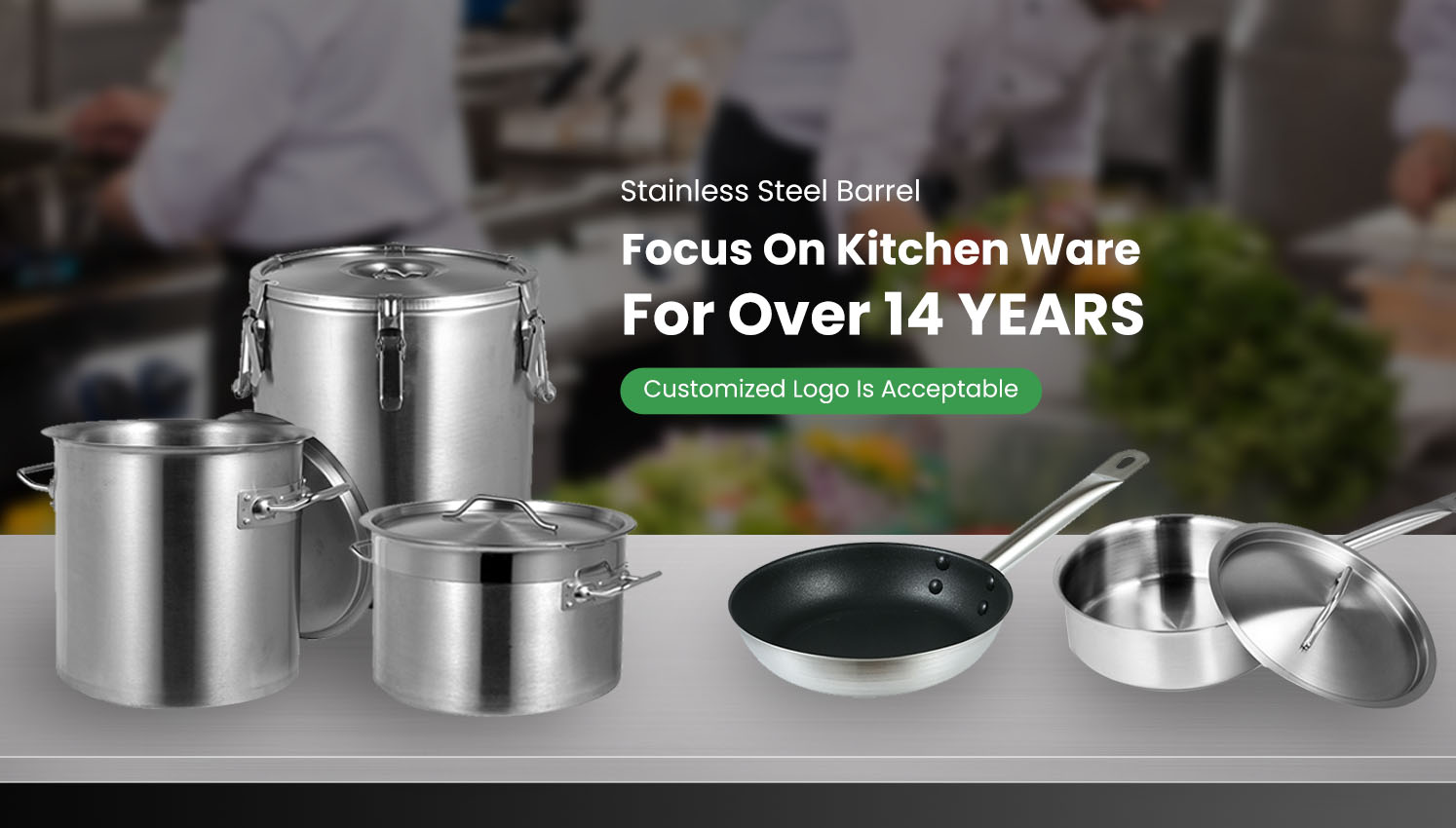
Purchasing kitchen equipment is often treated as a price comparison task, but the real cost appears after the equipment enters daily operation. A low-cost trolley that bends, a food warmer that does not match GN pans, or an insulated container that is difficult to clean can create repeated problems for restaurants, hotels, canteens, and catering teams.
JUNERTE manufactures stainless steel kitchenware, kitchen trolleys, and buffet equipment in Jiangmen, China. The company was established in 2016, covers about 8,000 square meters, and has more than 45 employees. Its product range includes chafing dishes, Service Trolleys, GN containers, Insulated Buckets, soup kettles, juice dispensers, bain maries, Rack Trolleys, Steamers, stock pots, and related commercial kitchen products.
Low purchase price can look attractive during quotation comparison. However, commercial kitchens use equipment every day under heat, moisture, washing, loading, movement, and repeated handling. When products deform, rust, wobble, or fail to fit other equipment, the operating cost becomes much higher than the original saving.
A smarter purchasing decision compares material, structure, finishing, product consistency, packaging, lead time, and replacement support. This is one of the most important kitchen equipment buying mistakes to avoid because price alone cannot show how the product will perform after months of real use.
Many kitchens buy products one by one without considering whether they work together. A GN pan may not sit properly in a warmer. A trolley shelf may not fit common tray sizes. A chafing dish may take too much counter space. An insulated bucket may be too tall for storage racks.
Commercial kitchen equipment should be selected as a system. JUNERTE’s range includes GN containers, chafing dishes, insulated buckets, service trolleys, rack trolleys, and buffet display products, which helps buyers match food preparation, transport, holding, and serving equipment more consistently.
Material affects durability, hygiene, cleaning, and long-term appearance. In commercial kitchens, stainless steel is widely used because it offers corrosion resistance and supports repeated cleaning. NSF food equipment standards cover material, design, construction, sanitation, and performance requirements for commercial food equipment, showing how important material selection is in foodservice environments. (nsf.org)
Poor material choice can lead to rust marks, difficult cleaning, sharp edges, weak shelves, or unstable heating areas. For commercial kitchen purchasing, stainless steel structure, surface finishing, welding quality, and edge treatment should be checked before confirming bulk orders.
| Mistake | Possible Result | Better Purchasing Check |
|---|---|---|
| Buying only by price | Shorter service life, more replacement | Compare structure and material |
| Ignoring dimensions | Poor fit with pans, shelves, counters | Confirm size before order |
| Overlooking cleaning | Higher labor pressure | Check corners, joints, removable parts |
| Underestimating transport | Dents or missing accessories | Review packaging method |
| Choosing random suppliers | Inconsistent repeat orders | Check factory range and production stability |
Kitchen equipment often supports food safety workflow. Chafing dishes, bain maries, soup kettles, insulated containers, and GN pans all affect how food is stored, held, moved, and served.
FDA guidance describes the temperature danger zone as usually between 41°F and 135°F, where food is more susceptible to pathogen growth. It also shows that time spent in this range should be minimized by proper cooling and temperature control.
Because of this, catering equipment selection should consider heat holding, cold storage, food transport time, pan depth, lid design, and refill frequency. Equipment that looks suitable in a catalog may still fail if it does not support the kitchen’s real service route.
A busy kitchen cannot spend too much time cleaning equipment with deep corners, rough welds, fixed narrow gaps, or difficult-to-remove parts. Products used for food contact should be easy to wash, dry, and inspect.
Chafing dishes should have accessible water pans and food pans. GN containers should stack smoothly but separate easily. Trolleys should have surfaces that can be wiped quickly. Insulated containers should allow staff to clean the inner wall and lid properly after each service.
Good cleaning design reduces labor pressure and helps equipment stay presentable for longer use.
Some buyers focus on service capacity but forget where equipment will be placed after service. Buffet warmers, trolleys, GN pans, soup kettles, and insulated buckets can take up significant space when not in use.
Stackable pans, suitable trolley sizes, removable accessories, and organized product dimensions can make storage easier. For restaurants with limited back-of-house space, this point matters as much as service performance.
Overseas orders face a long transport process. Stainless steel equipment can be scratched, dented, or damaged when packaging is weak. Missing accessories can also delay installation or service preparation.
Before placing an order, buyers should confirm carton strength, inner protection, accessory packing, labeling, and loading arrangement. For wholesale orders, packaging consistency helps reduce inspection pressure after arrival.
Kitchen equipment is not a one-time purchase. Restaurants, catering companies, distributors, and hotel groups often need replacement pans, additional trolleys, more warmers, or matching accessories later.
A supplier with unstable specifications can create problems for repeat orders. The same model should maintain consistent size, finish, structure, and packaging. JUNERTE’s focused commercial kitchen product system gives buyers a practical option for long-term supply planning, especially when equipment must match across multiple purchasing batches.
A useful avoid buying mistakes kitchen equipment checklist should include several direct questions.
Does the equipment match existing GN pans, counters, racks, and trolleys
Is the material suitable for moisture, heat, cleaning, and repeated handling
Can the supplier provide the main equipment categories together
Are dimensions, thickness, packaging, and accessories clearly confirmed
Is the product easy to clean after daily service
Can the same specification be supplied again for future orders
These points also work as practical catering equipment buying tips for buyers comparing different product lines and suppliers.
JUNERTE’s value comes from manufacturing a connected range of buffet and kitchen equipment instead of only one isolated product. Its catalog covers food warming, food storage, serving, transport, holding, and kitchen support equipment. This makes it easier to build a more consistent purchasing plan.
Working with a manufacturer that understands stainless steel kitchenware, kitchen trolleys, and buffet equipment can reduce matching problems and simplify communication. For commercial foodservice operations, the right equipment should improve workflow, cleaning, food handling, and long-term replacement planning.
Common kitchen equipment buying mistakes usually come from focusing too much on unit price and not enough on real operation. Material, size, cleaning, temperature control, packaging, storage, and supplier consistency all affect long-term value.
A better purchasing plan should start from the kitchen workflow, then match equipment to service volume, food type, movement route, and cleaning process. With chafing dishes, GN containers, service trolleys, insulated buckets, bain maries,